Tag Archive for: Group Insurance Trust

Your healthcare provider recommends a medical test or procedure, but before you can schedule it, your health plan may require one more step: prior authorization.

Prior authorization is a process some health insurance plans use to determine whether certain medications, imaging tests, procedures, or medical services meet the plan’s coverage requirements before they are provided. While not every service requires prior authorization, many plans use it for higher-cost services or treatments.

The purpose of prior authorization is to help ensure that care is medically appropriate and consistent with a health plan’s guidelines. Requirements vary by insurance carrier and health plan, which means a service that requires prior authorization under one plan may not require it under another.

One common misconception is that if a healthcare provider recommends a service, it is automatically covered by insurance. Provider recommendations and insurance coverage decisions are separate. Even experienced healthcare providers may not know the specific requirements of every health plan.

Read more

Many people are surprised to learn that the cost of healthcare services can vary significantly, even when the service itself appears to be exactly the same.

For example, two individuals may receive the same imaging test, lab work, or office visit and receive very different bills depending on where the service was performed, whether the provider was in-network, and how their health plan is structured.

One of the biggest factors affecting cost is provider networks. In-network providers have negotiated contracted rates with insurance carriers, which are generally lower than out-of-network pricing. Out-of-network care may result in higher deductibles, coinsurance percentages, or additional balance billing depending on the plan.

Health plan design also plays a major role in what someone pays out of pocket. Traditional PPO plans often include fixed copays for services such as office visits or prescriptions, which can make costs feel more predictable. HSA-compatible high-deductible health plans typically operate differently. In many cases, individuals enrolled in HSA plans may pay the full contracted cost of services until the deductible is met, after which coinsurance may apply.

Read more

Many people have heard the terms copay and coinsurance, but understanding the difference between the two can help make healthcare costs more predictable and easier to understand.

A copay is usually a fixed dollar amount paid for a specific service, such as a primary care visit, specialist appointment, or prescription. For example, you may pay a $30 copay for an office visit regardless of the total cost of the appointment.

Coinsurance works differently. Instead of paying a fixed amount, coinsurance is a percentage of the cost of a service that you are responsible for paying after meeting your deductible. For example, if your plan has a 20 percent coinsurance, you may pay 20 percent of the allowed cost for a covered service while your health plan pays the remaining amount. Out-of-network care may also result in higher out-of-pocket costs, as coinsurance percentages and allowed amounts can differ from those for in-network services.

Read more

Telehealth usage continues to grow as more individuals look for convenient and accessible healthcare options. While virtual care existed before COVID-19, the pandemic significantly accelerated its adoption as healthcare providers and patients looked for safe ways to access care remotely.

Telehealth visits have continued to increase in recent years, and many patients value the convenience and flexibility that virtual care provides. Telehealth is commonly used for primary care visits, behavioral health support, prescription refills, follow-up appointments, and other non-emergency concerns.

For many people, virtual visits reduce travel time and make it easier to fit appointments into busy schedules. A good example of when telehealth may be useful is for concerns such as conjunctivitis (pink eye), where an individual may receive care quickly without an in-person visit and have medication prescribed if necessary.

Many health plans now include telehealth services as part of their benefits, and virtual care can often be a lower-cost option than urgent care or emergency room visits for non-emergency conditions. CalCPA Health medical members have access to LiveHealth Online for virtual medical and behavioral health visits.

Individuals should check with their healthcare providers to see if telehealth options are available. It can also be helpful to review plan documents to understand how telehealth services are covered under a specific health plan, including costs and eligible services.

Understanding when telehealth is appropriate can help individuals make more informed decisions about where to receive care and may provide a convenient option for accessing healthcare when in-person visits are not necessary.

While telehealth can be helpful for many non-emergency concerns, individuals experiencing severe symptoms or medical emergencies should seek in-person or emergency care when appropriate.

Coverage and telehealth services may vary by plan and provider. Members should review their plan documents and confirm coverage details before receiving services.

One of the most common areas of confusion in healthcare is the difference between preventive and diagnostic care. Many people schedule what they believe is a routine preventive visit, only to later receive a bill they were not expecting.

The difference often comes down to why the service was performed and what was discussed during the visit.

Preventive care is designed to help detect or prevent health issues before symptoms appear. These services may include annual wellness visits, routine screenings, vaccinations, and certain lab tests. When completed in-network, many preventive services are covered at little to no cost under most health plans.

Diagnostic care is different. It occurs when a provider is evaluating a specific symptom, concern, condition, or follow-up issue. Once care becomes diagnostic, out-of-pocket costs such as deductibles, copays, or coinsurance may apply.

For example, an annual wellness visit scheduled as preventive care may be covered in full. However, if additional concerns are addressed during the appointment, such as ongoing headaches, stomach pain, or a new symptom, part of the visit may be billed as diagnostic care.

Similarly, a routine screening mammogram is typically considered preventive care. However, if additional imaging is needed because of a lump, pain, or another concern, those services may be considered diagnostic and billed differently. Even though the tests may seem similar, the reason they are being performed can affect how coverage is applied.

The same can apply to screenings and lab work. A routine screening completed as part of preventive care may be covered differently than a test ordered to investigate a specific medical concern.

This does not mean you should avoid asking questions or discussing your health with your provider. It simply highlights the importance of understanding how services are classified and billed.

Before an appointment, it can be helpful to ask:

  • Is this visit considered preventive or diagnostic?
  • Will any additional concerns discussed during the visit affect how it is billed?
  • Are labs or screenings covered as preventive under my plan?
  • Will I have any out-of-pocket costs?

These conversations can help you better understand your coverage and avoid unexpected surprises later.

Understanding how preventive and diagnostic care work is an important part of being an informed healthcare consumer. Health insurance can feel complicated but asking questions and learning how your plan works can help you make more confident decisions about your care.

Preventive care remains one of the best ways to support long-term health and identify potential concerns early. Staying proactive, scheduling routine visits, and understanding your benefits can help you make the most of your health plan throughout the year.

Note: Coverage, billing, and preventive care classifications vary by plan and provider. Members should review their plan documents and confirm coverage details before receiving services.


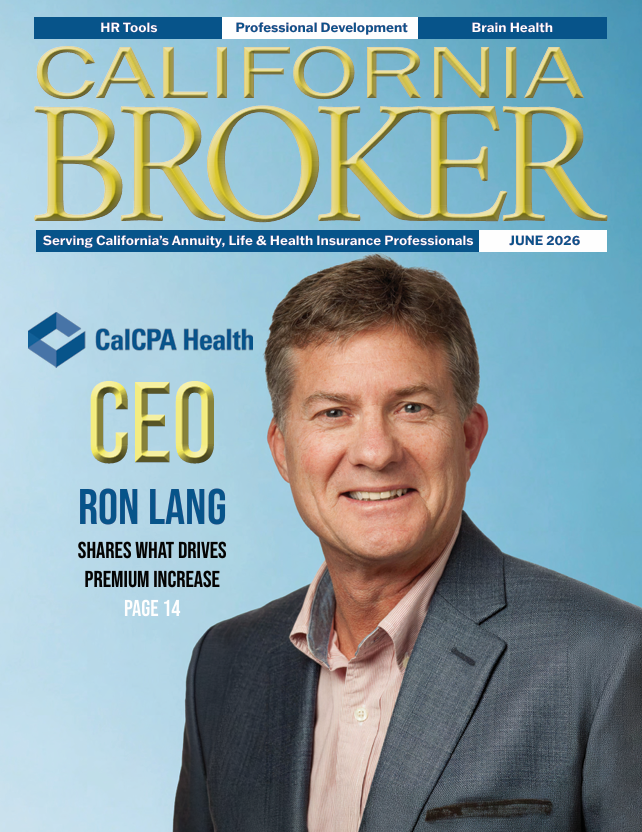
By Ron Lang, CEO, CalCPA Health (June 2026 issue of CalBroker Magazine)

Over the past 18 months, health insurance premiums have risen at levels not seen since the early days of the Affordable Care Act (ACA). For consumers, the conclusion feels obvious: insurance companies must be driving up premiums.

But that conclusion overlooks how the system actually works.

Consumers, and often the media, see only the end result: higher premiums. Meanwhile, hospitals, physicians, and pharmaceutical manufacturers largely escape the same level of scrutiny. Health insurers, for their part, have not always been effective at communicating their role in managing these costs.

The reality is that today’s premium increases are the result of multiple factors converging at once, each pushing the total cost of care higher.


Why Premiums Are Rising Faster Now

High-Cost (“Nuclear”) Claims

Extremely expensive cases are reshaping the total cost curve. Gene therapies can exceed $2 million for a single treatment, and other breakthrough treatments come with million-dollar price tags. These innovations miraculously improve patients’ lives, but their costs ultimately flow through to premiums.

Prescription Drug Spending

Drug costs continue to outpace overall medical inflation. More individuals are taking medications for more conditions, and specialty drugs, particularly in oncology and rare diseases, carry annual costs in the hundreds of thousands of dollars.

GLP-1 medications, used for diabetes and weight management, are a prime example: high utilization combined with high cost is materially impacting trend.

A decade ago, prescription drugs accounted for less than 10% of total healthcare spending. Today, that figure has doubled to around 20%, a shift driven not by traditional inflation, but by the rise of specialty therapies and high-cost chronic treatments. Prescription drugs, while still a minority of total spend, are now one of the fastest-growing components of overall healthcare costs.

While generics and biosimilars continue to provide savings in some categories, those gains are frequently offset by the introduction of newer, higher-cost therapies. GLP-1 utilization is further accelerating this trend.

Increased Utilization Across the Board

People are simply using more healthcare. Rising rates of obesity, diabetes, cardiovascular disease, and autoimmune conditions are driving more physician visits, diagnostic testing, hospitalizations, and prescriptions. When utilization increases, total costs, and therefore premiums, follow.

Wage and Price Pressures in Healthcare

Healthcare is labor-intensive. Hospitals and physician groups are facing sustained wage pressure for nurses, physicians, and skilled technicians. Many provider contracts renew on multi-year cycles, meaning recent inflation is only now being reflected in negotiated reimbursement rates.

The “Regulatory Stack”

New state and federal mandates, while often well-intentioned, add incremental cost. Recent examples in California include expanded IVF coverage requirements and caps on insulin cost-sharing. Each mandate adds to what some refer to as the “regulatory stack,” while each mandate may be a small percentage increase to premiums, together and over time, they add a material amount.  Meanwhile, legislation that would actually reduce costs, rarely seems to be enacted.

Why Health Insurance Companies Look the Way They Do

Consumers and employers wanting the lowest possible premiums have shaped what health insurers look like. Many of the features consumers associate with “insurance friction” were originally designed by health insurance companies to control doctor/hospital behavior and costs; and protect patients from unnecessary or overpriced care.

These include:

  • Prior authorization and utilization review
  • Second surgical opinions
  • Provider networks that negotiate discounted rates
  • Case management and billing oversight
  • Preferred Provider Networks (and HMO’s)

Care delivered outside of PPO/HMO networks typically lacks these cost and safety controls, which is why out-of-network services are often significantly more expensive.

On the pharmacy side, Pharmacy Benefit Managers (PBMs) deploy tools such as formularies, generic substitution, step therapy, and manufacturer rebates to slow the growth of drug spending. These mechanisms are often criticized, but without them, costs would be significantly higher.

Built-In Limits on Insurance Company Profits

It is also important to understand that health insurers operate under explicit profit constraints. Under federal law (ACA), medical loss ratio (MLR) requirements leave a set percentage (15 or 20%) for insurance carrier expenses, including profit.  Failure to meet MLR thresholds results in premium rebates, thereby limiting carrier profits.  This structure effectively caps margins and ties insurer profitability to overall healthcare spending. When costs rise, premiums must follow, not to increase profits, but to cover claims.

Bottom Line

Health insurers are often the most visible part of the system, but they are not the primary drivers of cost increases. In many ways, they function as financial intermediaries, aggregating and managing the underlying costs generated elsewhere in the healthcare system.

California’s Health Care Affordability Council was chartered to cap premiums and healthcare spending, but to date, has had little measurable effect on overall costs. If the goal is to meaningfully address rising premiums, the focus must be on the drivers of healthcare cost: provider/hospital costs, pharmaceutical pricing, and regulatory design.

Health insurance premiums are climbing fast, affecting both employers and employees. Rising medical costs aren’t new, but the pace of increase today reflects several powerful forces coming together at once, from high-cost specialty drugs to “nuclear” claims and labor inflation. Understanding why premiums are increasing is the first step to managing them.

One of the biggest drivers is the growing number of extremely high-cost claims – or “nuclear” claims. A small number of cases are reshaping the health insurance landscape. Gene therapies often run $2 million or more per treatment, and other “miracle treatment” technologies come with high price tags. These advances improve outcomes, but their costs flow into premiums.

Prescription drug costs are another major factor. Drug spending continues to grow faster than overall medical inflation. More people are taking medications for more conditions, and specialty drugs, especially cancer therapies, carry steep price tags. GLP-1 drugs, used for diabetes and weight management, are adding additional pressure. They are widely used and carry a high cost, which creates both frequency and cost challenges.

At the same time, people are using more healthcare overall. Rates of obesity, diabetes, cardiovascular disease, and inflammatory conditions are contributing to more doctor visits, more tests, more hospitalizations, and more prescriptions. When utilization climbs, premiums follow.

Healthcare is heavily impacted by labor costs. Hospitals and medical groups face higher wages for nurses, physicians, and technicians. Because provider contracts are typically renegotiated every few years, recent inflation is now reflected in new pricing agreements.

Regulatory changes also play a role. New state and federal mandates, even well-intentioned ones, add cost. California’s requirements for IVF coverage and caps on insulin spending are recent examples. Each mandate contributes to what many call the “regulatory stack,” appearing in the premium cost structure.

Prescription drugs now account for roughly 20% of total medical spending. A small percentage of people drive more than half of all prescription drug costs, largely due to specialty treatments that can run $200,000–$400,000 (or more) annually. GLP-1 utilization continues to expand. Generics and biosimilars provide some relief, but for every drug that comes off patent, a more expensive one often takes its place.

Insurance companies are often blamed for rising costs, but many standard plan elements were originally created by them to control unnecessary spending and protect members from unknown prices and unneeded medical services. Examples include:

    • Prior authorizations and utilization reviews
    • Second surgical opinions
    • Provider networks (PPOs) with negotiated allowable charges
    • Case-rate agreements and billing compliance standards

Out-of-network providers typically avoid these controls, which is why their services cost more.

On the pharmacy side, Pharmacy Benefit Managers (PBMs) use formulary management, generic substitution, step therapy, GLP-1 oversight, and rebates to help contain costs. While not perfect, these strategies are designed to balance access and affordability.

For employers and individuals, the challenge is not just understanding why costs are rising, but how to respond.  Many receive just 3–6 months’ notice of annual premium increases. We know healthcare inflation is unpredictable, so having informed estimates can help prevent scrambling at renewal time.

Cost sensitivity continues to drive decisions. Whether selecting a plan as an employer or choosing coverage as an individual, there is often a focus on keeping premiums low. The key is to balance that with the level of financial risk you are willing to take on. Looking at total cost, not just premiums, can help you make an informed decision.

Guidance matters. Employers benefit from internal expertise or strong broker support, and individuals benefit from taking the time to understand their coverage. Health insurance is one of the largest expenses most people will face, and being informed can make a meaningful difference.

Many employers and employees “overbuy” or misjudge the trade-off between premiums and out-of-pocket exposure. Choosing a lower premium option with higher out-of-pocket exposure, or vice versa, should be done with a clear understanding of how the plan will be used. HSA-compatible plans can be effective, especially when used by participants who understand how to use them and take advantage of preventive care and cost comparison tools.

Guidance helps. Employers benefit from in-house expertise or strong broker support or other external resources. Individuals also benefit when they invest time in understanding their coverage and plan options. Health insurance is one of the largest lifetime expenses for most households, and being informed can make a meaningful difference.

When premiums spike, employers often explore alternative solutions. These options can offer savings in certain situations, but they also come with risk and should be carefully reviewed. ICHRAs (Individual Coverage HRAs) are also gaining attention, but in California they have not consistently proven to be cost-effective at scale.

The healthcare system is complicated, and most people have little training in how to navigate it. Being an informed consumer means understanding how your plan works, knowing where to find value, and making informed decisions.

For employers, health insurance is often the second-largest expense after payroll. For individuals, it is one of the top costs in the household budget. Taking the time to build knowledge or access reliable guidance can have a real impact.

Premium increases reflect a mix of breakthrough treatments, rising chronic disease, regulatory mandates, pharmaceutical inflation, and higher provider costs. While these trends are not likely to slow immediately, employers and individuals have options. Through thoughtful planning, proactive decision-making, and access to knowledgeable guidance, it is possible to manage these costs more effectively.

This article reflects data and trends from CMS, KFF, PwC Health Research Institute, and national pharmacy and actuarial reports.


It’s on every headline in the newspaper and on the news – healthcare costs in the U.S. continue to rise sharply. It is affecting the entire country, and there seems to be no end in sight to the continued rise in costs. In 2023, national healthcare spending surged 7.5% to $4.9 trillion, accounting for 17.6% of U.S. GDP[1] [2]. That’s nearly one-fifth of the economy, and it’s projected to rise even higher in the years ahead.[3]

Prescription drug costs alone rose 11.4% in 2023, resulting in drugs now making up 9.2% of total health spending [4]. According to PWC, “Drug spending in the US grew by $50 billion (11.4%) from $437 billion to $487 billion in 2024 at net manufacturer prices, up from $20 billion of growth (4.9%) in 2023. The trend is expected to extend into the coming years, driven by growth in oncology, immunology, cardiovascular, obesity, and diabetes drugs.”

New for 2026: Copay-Only Alternative Health Plans (AHPs)

To help employers manage rising costs and expand plan options, CalCPA Health is introducing a suite of Alternative Health Plans (AHPs) through Anthem Blue Cross, powered by Coupe Health™. These tiered, copay-only PPO designs emphasize clarity, quality, and cost control, with no gatekeeper required. Members can view provider tiers and their out-of-pocket costs before scheduling care, which enables smarter, value-driven decisions that can lead to savings for both employers and employees.

While AHPs are not new, CalCPA Health’s offerings stand out by including Small Group and HSA-compatible options—a rare find in the market. Learn more about these plan offerings and search for in-network healthcare providers.

Benefits for Employees

  • No deductibles* or coinsurance on most plans.
  • Access to California’s largest provider network – Anthem Blue Cross.
  • Cost transparency tools to view provider rankings and exact costs upfront.
  • Tiered provider rankings highlight quality and value.
  • Comprehensive coverage of ACA essential health benefits: including preventive care, hospital/urgent/emergency services, specialty care, pharmacy, maternity, behavioral health, and more.

Benefits for Employers

  • Premium savings potential, thanks to more efficient plan design and guiding members to high-performing providers.
  • Smarter employee healthcare choices—when costs are visible before care, usage aligns with value.
  • Plans that align with expectations—transparency, convenience, and choice.
  • Improved employee retention by offering flexible, cost-effective options.

With healthcare spending and pharmacy costs continuing to rise, firms seek innovative, value-driven approaches rather than traditional plans with higher price tags. CalCPA Health’s AHPs offer CalCPA member firms a compelling alternative: Anthem’s provider network, combined with Coupe Health’s™ cost-transparency capabilities. These plans deliver what today’s market is looking for: affordability, clarity, quality, and flexibility.

*Two AHPs are HSA-compatible HDHPs, which do include a deductible.


[1] https://www.pgpf.org/article/healthcare-spending-will-be-one-fifth-of-the-economy-within-a-decade

[2] https://www.reuters.com/business/healthcare-pharmaceuticals/us-healthcare-spending-rises-48-trillion-2023-outpacing-gdp-2024-06-12/

[3] https://www.pgpf.org/article/healthcare-spending-will-be-one-fifth-of-the-economy-within-a-decade

[4] https://www.chcf.org/resource/national-health-spending-almanac


Open Enrollment is the annual opportunity to review your health insurance options and make changes for the upcoming year. For most of us —whether employers, solo practitioners, or employees —open enrollment typically occurs in the fourth quarter, and new benefits take effect on January 1st of the new year.

This period is especially important because outside of open enrollment, you can only make changes to your coverage if you experience a qualifying life event (such as marriage, divorce, birth of a child, or loss of other coverage). That means this is your chance to:

  • Reevaluate whether your current plan still meets your needs.
  • Compare costs and coverage options, including PPOs, HSAs, EPOs, HMOs, or Alternative Health Plans (AHPs).
  • Add or adjust coverage for dependents.
  • Research Health Savings Accounts (HSAs) and the tax-advantaged options these plans provide.
  • As an employer, evaluate your current plan offerings and consider what adjustments may be needed, and if new options are available that would improve employee retention and satisfaction.

Why It Matters This Year

Healthcare costs and coverage trends continue to shift, with rising pharmacy and claim expenses, as well as evolving provider networks. More employers are introducing an array of choices, including innovative alternatives that emphasize transparency and cost savings. Employees may be seeking ways to get the most value from their benefits and manage their premium costs – and know the cost before a visit. (Learn about the new Alternative Health Plans – AHPs – that CalCPA Health is offering for 2026!)

Reviewing your options before open enrollment deadlines is key, so you have enough time to research and understand what’s available to you, your family, and your firm. Becoming your best advocate on health insurance can lead to lower out-of-pocket costs, access to preferred providers, and greater financial protection for the year ahead.

Tips for Open Enrollment Readiness

  • Start early. Don’t wait until the final days of enrollment—give yourself time to compare and select the best plan.
  • Review your healthcare usage. Think about your doctor visits, prescriptions, and family needs over the past year – did you use these benefits?
  • Look at the long term. HSAs, for example, may offer both immediate premium savings and future tax advantages, allowing you to save now for future medical expenses.
  • Ask questions. Your HR team, broker, or plan administrator can help explain plan differences and benefits.

NOTE: CalCPA members can reach out to CalCPA Health with their health insurance benefit questions – whether you are enrolled with us or not – by email info@CalCPAHealth.com or call 866-730-3593.

Open enrollment is an opportunity to align your health coverage with your personal, family, and financial needs. By researching and asking questions, you’ll enter the new year with confidence, knowing you made the best choice available to you.

Via an Interview with Ron Lang (CEO of CalCPA Health), By Phil Calhoun (CEO of California Broker Media)

CalCPA Health Coverage Options: A Deep Dive into Plan Variety and HSA Leadership (Part 2 of 3)

In the second installment of our in-depth look at CalCPA Health, CEO Ron Lang discusses the breadth of coverage options available to California’s CPA and financial professional firms. This part of the interview explores the organization’s philosophy on plan design, its industry-leading approach to Health Savings Account (HSA) plans, and how CalCPA Health’s flexibility and integration set the plans and support as a leader in the competitive group health market for many businesses in the financial services industries.

A Broad Spectrum of Plans: Choice and Customization

CalCPA Health offers an exceptionally wide range of medical plans with about 40 in total. The plans span from Preferred Provider Organizations (PPOs), Exclusive Provider Organizations (EPOs), Health Maintenance Organizations (HMOs), and an extensive suite of HSA-eligible high-deductible health plans. This variety is designed intentionally to meet the diverse needs of small and mid-sized firms that often have employees with different healthcare preferences and financial situations.

While some national insurers may abruptly cancel plans and move members to new options, CalCPA Health takes a more measured approach. The organization is mindful about removing plans from the market and prefers to maintain continuity for its members, even as it regularly reviews and refines its offerings to avoid overwhelming employers and employees with too many choices.

HSA Plans: A Core Strength and Differentiator

One of the standout features of CalCPA Health is its strong emphasis on HSA-eligible plans. Roughly half of CalCPA Health’s insured population is enrolled in an HSA plan, a figure far above the national average of approximately 24 percent (and even higher compared to California’s average). This is no accident; as Lang explains, the CPA and financial professional audience is uniquely positioned to appreciate the tax advantages and long-term savings potential of HSAs.

Why HSAs Are So Popular with CalCPA Health Members

  • Tax and Savings Benefits: HSAs allow for pre-tax contributions, tax-free investment growth and tax-free distributions to cover qualified medical expenses. Unused funds roll over year-to-year, accumulating for future healthcare needs.
  • Financial Literacy: CalCPA Health’s clients, primarily CPAs and financial professionals, tend to understand and value these benefits, making them more likely to enroll and actively use HSAs as part of their overall financial planning.
  • Talent Attraction and Retention: Many firms use HSA plans as a recruitment and retention tool, offering employer contributions to HSAs outside of 401(k) plans and without running afoul of discrimination rules. This flexibility is highly valued by both owners and employees.

A Wide Range of HSA Plan Designs

CalCPA Health offers the largest selection of HSA-eligible plans in the state, starting at the federal minimum deductible and increasing in increments as high as $6,500. This allows firms and employees to select plans that match their risk tolerance and financial goals. Many members start with lower deductibles as they build up their HSA balances, then move to higher deductible plans as their comfort with the HSA model grows and balances in the account total more than the plan deductible.

Fully Integrated HSA Administration

CalCPA Health’s HSA plans are fully integrated with HealthEquity, streamlining administration for both employers and employees. Employees can pay providers directly from their HSA, reconcile debit card transactions, and manage their accounts online. Employers benefit from simplified processes for adding new hires, changing contribution amounts, or deleting HSA contributions, which reduce administrative burdens.

Other Plan Types: PPOs, EPOs, and HMOs

In addition to high-deductible PPO plans which are HSA eligible, CalCPA Health provides a full suite of traditional PPO plans, which offer flexibility to see any provider but with cost savings for using in-network doctors and hospitals. EPO plans are also available, providing in-network-only coverage without the requirement for primary care physician referrals, which isa popular choice for firms that want simplicity without the restrictions of an HMO.

For those who prefer the predictability and coordinated care of an HMO, CalCPA Health partners with Anthem Blue Cross to offer HMO and Select HMO plans. These plans require members to choose a primary care physician and obtain referrals for specialty care, but they offer no-claims paperwork for in-network services and comprehensive coverage, including mental health and substance abuse services.

Mix-and-Match Flexibility and Kaiser Integration

One of CalCPA Health’s unique features is its willingness to allow firms to “mix and match” plan types. Employers can offer any combination of copay, HSA, and Anthem Blue Cross HMO plans, tailoring benefits to the needs of their workforce. Furthermore, CalCPA Health will write plans alongside Kaiser Permanente, accommodating employees who prefer to stay with Kaiser without imposing participation requirements, as long as adverse selection is avoided. This flexibility is rare among group health providers and demonstrates CalCPA Health’s commitment to meeting member needs.

Network Strength and Member Experience

All CalCPA Health plans leverage the Anthem Blue Cross provider network—the largest in California—ensuring broad access to doctors, specialists, and hospitals. Members also benefit from value-added services like LiveHealth Online, which provides telemedicine and online mental health visits, and a single point of administration for medical, dental, vision, life, and disability plans.

Conclusion

CalCPA Health’s approach to plan design is rooted in flexibility, member education, and a deep understanding of its professional audience. By offering a broad spectrum of PPO, EPO, HMO, and especially HSA-eligible plans, with fully integrated administration and unmatched customization, CalCPA Health empowers CPA and financial services firms to provide high-quality, cost-effective benefits that attract and retain top talent. In the final part of this series, we’ll examine the value-added services, wellness programs, and future trends shaping CalCPA Health’s ongoing evolution.

https://calcpahealth.com/about-group-insurance-trust-calcpa-health/

https://calcpahealth.com/shop-for-a-plan/medical-plans/

https://calcpahealth.com/pdf/Plan_Brochure/2025_CalCPA_Health_Plan_Brochure.pdf

Part 3 Coming Next Month

CalCPA Health Coverage Options: A Deep Dive into Plan Variety and HSA Leadership (Part 2 of 3)

Via Interview with Ron Lang By Phil Calhoun

https://issuu.com/articles/112224906